School

Principal's Welcome

DHPS - Tradition and Cosmopolitanism - Unity in Diversity - DHPS

For more than 100 years now, the Deutsche Höhere Privatschule Windhoek guarantees excellent academic education. Learners of more than 20 different nations learn together in the kindergarten, pre-school, primary- and secondary section. The learners are instructed by international teachers, who are pedagogically committed to each individual learner. The academical offer provides learners of different linguistic and cultural background the opportunity to pursue their individual educational goals and to achieve their aspirations in an increasingly international world.

Bilingual training for all learners is an important advantage, which DHPS- school leavers are equipped with when they enter their studies or career. DHPS alumni study and work successfully in various fields in many countries in Africa, Europe and the rest of the world.
Your contact person(s)
Jörg Przybilla

Jörg Przybilla

Schulleiter - Principal

Tel: +264 (0)61 373 122

Primary School

Welcome to the DHPS Primary Section


The right way from the start - the opportunity to be a child in a comprehensive educational institution.


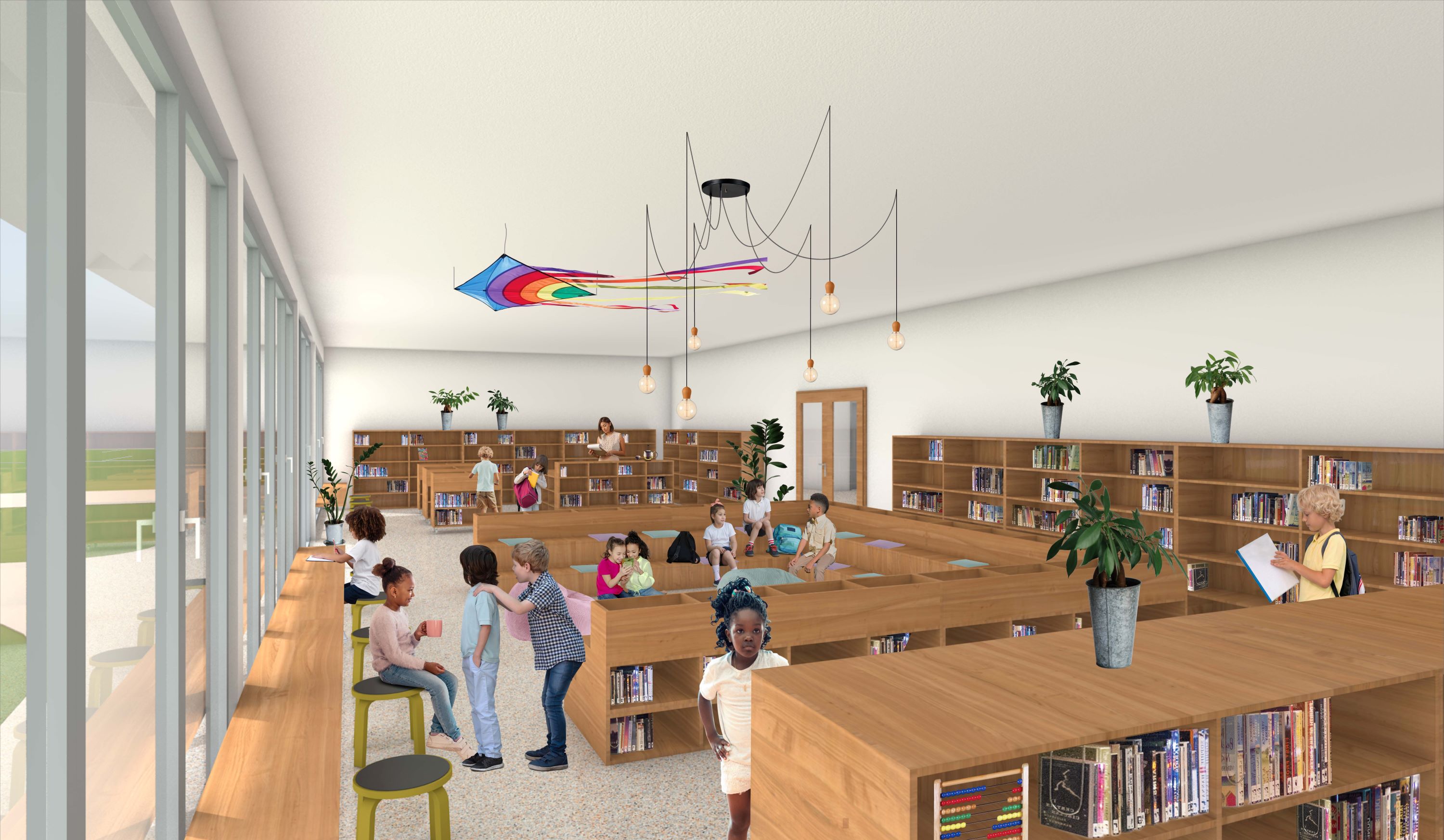
Our primary school is a lively place that focuses on holistic education. We offer modern classrooms, a well-stocked library, creative workshops and various sports facilities to create a dynamic learning environment.

We are deeply committed to the individual development of each child.
Our dedicated team of educators supports the learners with passion and expertise. We follow a curriculum approved by the Standing Conference of the Ministers of Education and Cultural Affairs (KMK), based on German educational standards. Our teaching approach centres on the class teacher principle, ensuring consistent guidance for learners. In addition to core subjects such as German, English, mathematics, and general science, we also value creative subjects such as art, music, and physical education. Religious studies and social learning are important parts of our holistic education. In computer studies, we help learners navigate the digital world confidently.

After classes, learners can join our free supervision service until 1:10 pm or participate in various extra-mural activities. The Child and Youth Centre also offers full-day care until 5:30 pm.
Currently, we have about 280 learners across 15 classes. Eleven classes are taught in German (except for English lessons), and three classes are primarily taught in English (except for German as a foreign language). Starting in 2025, we will introduce a class where main subjects are taught in English and music subjects in German. In the English-taught classes, we emphasise the German language by offering additional hours for German as a foreign language. We provide comprehensive support and enrichment programmes in language and mathematics for all classes.

Our school not only offers a strong academic foundation but also promotes personal growth and intercultural skills, preparing our learners well for the challenges of a global society.

Your contact person(s)
Valerie van Zyl

Valerie van Zyl

Grundschulleitung - Principal of the Primary Section

Tel: +264 (0)61 373 139

Carina Krenz

Carina Krenz

Stv. Grundschulleitung - Vice Principal of the Primary Section

Tel: (+264) 61 373 139

Be the change ...

you want to see at DHPS!

Our Vision:

We are building a school that...
  • enables modern learning for the 21st century
  • empowers children, optimizes learning & teaching
  • promotes inclusion & diversity
  • is designed to be sustainable & adaptable for the future

A New Primary School Building for a Strong Future

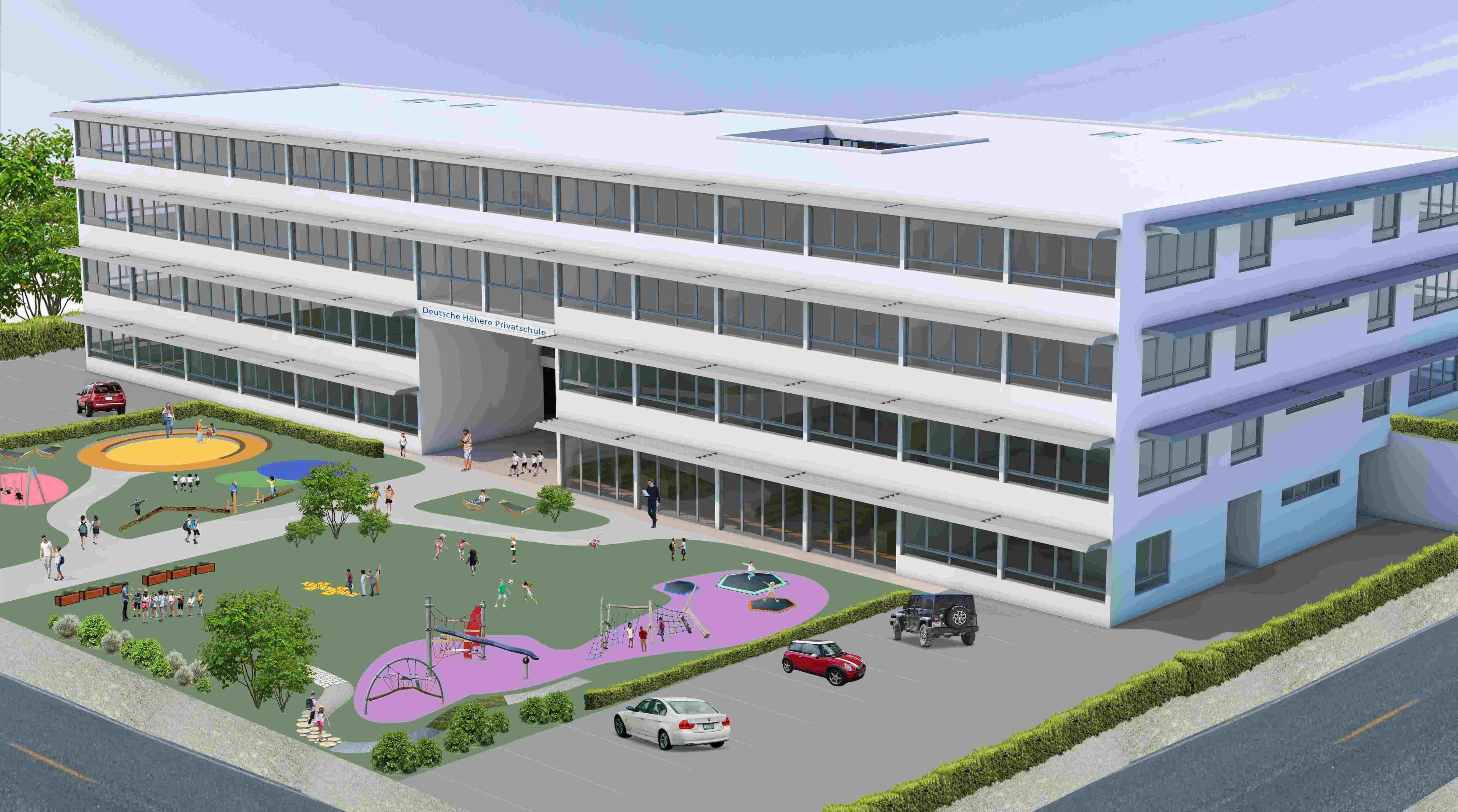
DHPS is planning a modern, future-oriented learning space for the primary school – a place where learning, living, and community come together.
This new building is not a luxury, but an investment in the quality of our education. It will create space for creativity, individual support, and modern pedagogy – for all children.

What added value does the new building offer all DHPS Learners?

  • A collaborative learning environment for the entire primary school.
  • More space & modern rooms for differentiated learning
  • Open learning landscapes with quiet zones and communal areas
  • All-day programmes & recreational spaces under one roof
  • Integration of the DHPS Child & Youth Center
  • Sustainable construction with lower operating costs

FAQs

The current building has reached its limits: rooms are too small, there’s little room for differentiation, and the infrastructure is outdated. Modern education requires spaces that allow for flexibility, creativity, and individualized support. The new building is not a “luxury solution,” but a necessary investment in the quality of our educational work. Our goal is to create an environment that facilitates learning, empowers children, and supports teachers - a school that meets the needs and challenges of the 21st century.

What is the Munich Lernhaus Model - and why is it relevant for DHPS?

The Munich "Lernhaus" Model takes a holistic approach to schooling: it cleverly links pedagogical concepts with architecture. Children learn in so-called “learning houses”- small units with open learning landscapes, retreat areas, communal spaces, and well-thought-out structures. For DHPS, this model offers the opportunity to design a modern, differentiated, and inclusive primary school where every child can learn according to their strengths and needs. Especially in our culturally diverse context, this is a major asset.
This model currently serves only as a planning blueprint; no educational or other specifications are established with it.
Financing is based on multiple pillars: public and private funding, the school’s own resources, and a solidarity-based donation concept. We ensure that no social exclusion occurs - access to DHPS should remain possible regardless of financial circumstances. Long-term costs such as maintenance and operations are also carefully calculated. The success of the project will be measured not only in terms of construction but also pedagogically - by the quality of learning, the satisfaction of children, parents, and teachers and its impact on our school development.

School fees will not be affected by the costs of the new building, as the financing plan foresees using only subsidies and donations - alongside reserves - for construction. A loan is not planned.
The planned location is on the DHPS school grounds, ensuring short distances, good accessibility and a smooth school day. The exact location will be coordinated with the relevant authorities and communicated transparently. What matters to us is that the new building is optimally embedded - spatially, functionally and pedagogically.

The new building will be more than just a place for teaching: it will be a vibrant space for learning and living.
  • Classrooms for all primary school grades
  • Differentiation rooms for individualized support
  • Communal areas/marketplaces for exchange and projects
  • Rooms for care (DHPS Support Centre) and leisure activities
  • DHPS Child & Youth Center (KiJuZe) as an integrated or adjacent area
The building will be used flexibly, active throughout the day, and tailored to the needs of children and educators.


What will the planned new building look like – and how flexible is it for the future?

The new building is based on the principles of the "Lernhaus" model - with open learning areas, multifunctional rooms, group workspaces, and modern specialist rooms. What’s important to us: the architecture remains flexible. Should pedagogy evolve - as we expect - the spatial concept can be adapted. We’re not building for a fixed concept; we’re building for learning. And learning can change. At the same time, we’re carefully evaluating which elements of the model make sense for Namibia—considering climate, culture, and practical use.
Transparency and participation are very important to us. Parents, staff and school committees are involved through working groups, planning workshops, and regular information events. Feedback and ideas flow directly into the process. We’ll also organize visits to similar projects so that interested parties can get a firsthand impression of the Learning House concept. Because we’re not just building for children - we’re building together with the entire school community.
For us, sustainability is not an add-on, but a basic requirement. The new building is being designed with energy efficiency in mind—including optimal insulation, natural ventilation, durable materials, and potentially solar technology. We’re focusing on low-maintenance construction and a well-thought-out operational concept to keep long-term costs low. Our goal is to build in a way that is both ecologically and economically sustainable.
Safety and smooth school operations are our top priorities. Construction will be scheduled so that noisy or potentially disruptive work takes place during non-teaching hours whenever possible. Classes will continue as usual- with temporary adjustments if needed. Children will be accommodated in safe, shielded areas, and we will communicate any changes early and transparently.
Every contribution counts - and we want to give all supporters the opportunity to be part of the project. This can range from one-time donations to symbolic “building block” campaigns or sponsorships for equipment or furniture. Small businesses as well as big companies can participate through targeted partnerships, in-kind donations, or public engagement formats - always transparently, gratefully, and visibly within their means.

Sponsors will be visibly acknowledged - if desired, through name recognition in the building, on digital platforms, or at events. For larger contributions, symbolic partnerships are also possible, such as naming rooms or learning areas. We ensure a balanced approach between recognition and the school’s pedagogical independence—decision-making rights in educational matters are excluded as a matter of principle.

Education is not a zero-sum game. DHPS stands for high-quality, international education, intercultural exchange, and individualized support - in a country facing significant educational challenges overall. A strong DHPS model can provide inspiration, secure jobs and foster long-term cooperation with other schools. Every investment here has a ripple effect - and offers children a perspective that reaches far beyond the classroom.
We welcome every inquiry and expression of interest!
Feel free to reach out directly to our school management or our “New Primary School Building” project team. Questions can also be submitted through the parent representatives, working groups, or information events. Your feedback is important to us - because this project is being shaped together with the entire school community.

Junior Secondary section

Junior Secondary section

The junior secondary section of the DHPS is our integrated section, with subjects being taught in German, English and bilingually.
This concept was developed to ensure the long-term viability and relevance of the school, to provide equal opportunities to all learners as well as to give further effect to the school’s mission statement with regard to being a school where genuine integration of cultures takes place.

From Grade 5 our German and English speaking learners will be taught together - in some subjects, such as Maths, the lesson will be completely bilingual, some subjects are taught in German or English only.

  • Subjects offered in the Junior Secondary Section are as follows; German, English, Mathematics, Physics, Biology, Chemistry, Geography, History, Economy and Administration, Computer studies, Technical studies, Religion, Ethics and Sports.
  • In Grade 6 the learners choose their second foreign language: French or Afrikaans.
  • The subjects Art and Music in Grades 7 and 8 are semester courses. In Grade 9 learners opt for either Art or Music. Computer studies is offered for one semester.

Curricula of the junior secondary section are based on the German applicable gymnasium curricula, and have been supplemented by Namibian country-specific elements. The new curriculum offers "Hauptschul"- and "Realschul" learners the possibility to achieve these German school leaving certificates in Grade 9 or 10.

  • All classes are offered a one-day methodology training.
  • Excursions & adventures: The Grade 6 all learners go on a four-day excursion to NaDEET together, while in Grade 8 a four-day Grade excursion to Rooisand is offered. Grade 9 classes conduct a one-week job-shadowing.
  • At the end of Grade 9, parents decide on the future school career: either the DIA-branch (Gr 10-12) with the resultant German International Abitur or the Cambridge-branch (also Gr. 10-12).
  • A wide offer of extra-mural activities supplements the compulsory lesson program. Participation in these activities is voluntary. The offer is re-organized on an annual basis.
Your contact person(s)
Carola  von Blottnitz

Carola von Blottnitz

2. stv. Schulleiterin - 2nd Vice Principal

Tel: +264 (0)61 373 137

Dr. Joachim Prinz

Dr. Joachim Prinz

Leitung: deutschsprachige Mittelstufe - Head: German Junior Secondary Section

Tel: +264 (0)61 373 123

Secondary School

Secondary School

Two routes - one destination: The school leaving certificates offered at the DHPS


At the DHPS, learners can choose between two different school leaving certificates:
The Cambridge Certificate or the German International Abitur (DIA).

After Grade 9, our learners opt for the Cambridge or the DIA stream.
Both high school diplomas are worldwide recognized university entrance qualifications.

Find out more about our high school certificates here:
Your contact person(s)
Xenia Pieterse

Xenia Pieterse

Cambridge - Koordinatorin / Coordinator

Tel: +264 (0)61 373 133

German Language Diploma (DSD)

German Language Diploma (DSD)


Imagine opening doors with your German skills: It's possible at DHPS - get your German Language Diploma (DSD)!


But what exactly is the German Language Diploma?
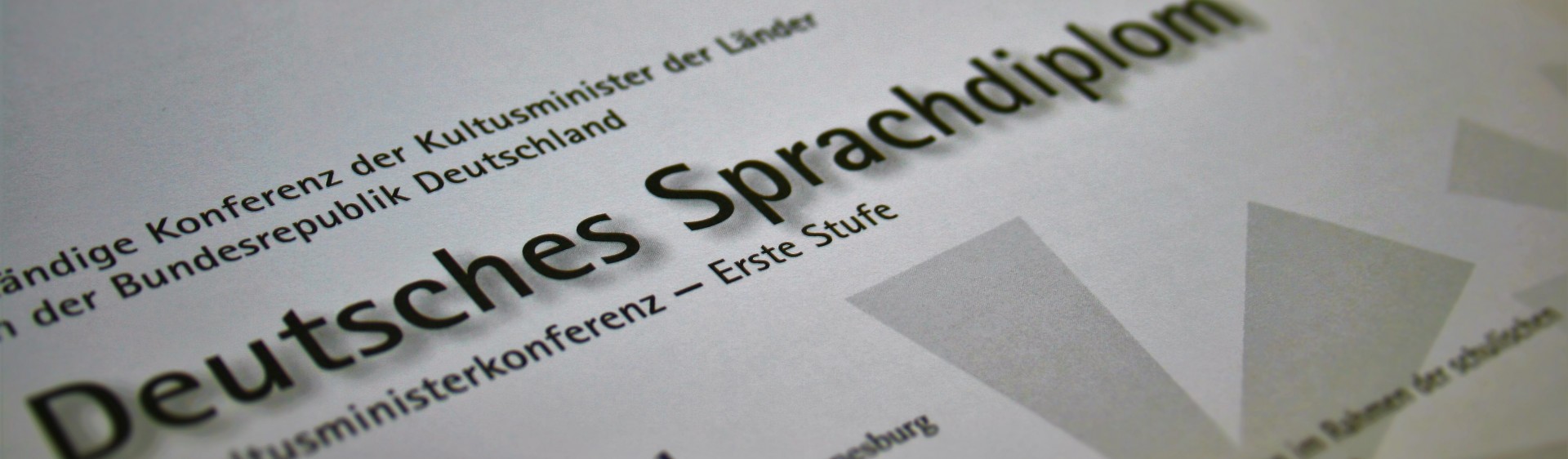
The German Language Diploma, or DSD for short, is a school programme jointly overseen by the federal and state governments of the Federal Republic of Germany. It is a recognized German examination by the Conference of Ministers of Education and Cultural Affairs (KMK).
It opens important doors for students pursuing an academic or professional career in Germany: With the DSD I, you gain access to the Studienkolleg in Germany, while the DSD II certifies the necessary knowledge of the German language as a prerequisite for university studies at German universities.

How Do These Exams Work?
The exams consist of various parts, including listening comprehension, reading comprehension, written expression, and oral communication. At our school, students take the DSD I in 9th grade and the DSD II in 12th grade. This ensures that language proficiency is thoroughly assessed.

When Are the DSD Exams Held and Who Can Participate?
The exams are conducted worldwide on centrally scheduled dates. The exam materials are uniformly designed, created, and evaluated in Germany. Currently, about 85,000 students with German as a foreign language participate in DSD exams each year. Students from approved DSD schools and international schools are allowed to take the DSD exams.

What Does It Cost?
One particularly attractive aspect is that the exams are completely free for DHPS learners, whereas enrolling in language courses and taking the final exams are usually associated with high costs.

The German Language Diploma thus not only provides a qualification but also a significant opportunity for the future of our learners.

If you would like to learn more, please contact our DSD coordination at DHPS Windhoek.
We are happy to provide further information and support regarding the DSD programme.


Your contact person(s)
Nora Oeser

Nora Oeser

DSD- & DaF-Koordinatorin - DSD & DaF Coordinator

Tel: +264 61 373 156

DHPS Support Centre

A Closer Look of the DHPS Support Centre

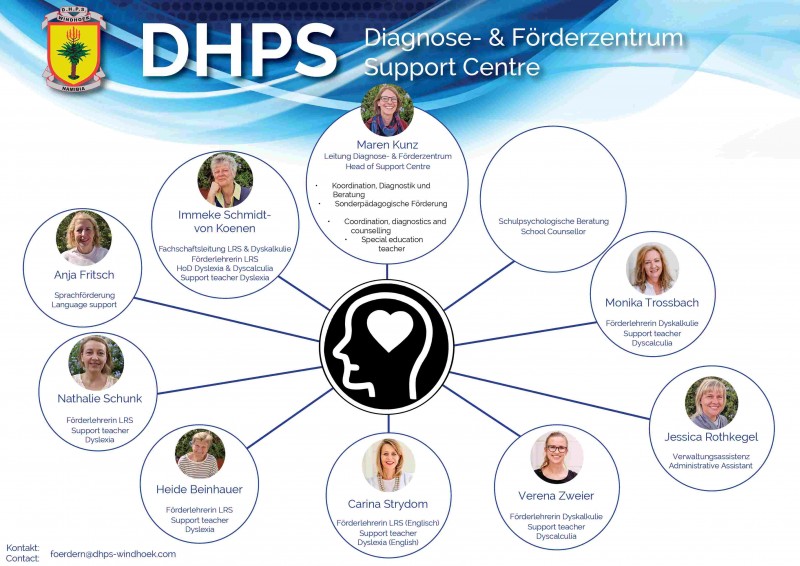
The Support Centre consists of a multi-professional team and serves as a place of support.

Together, we accompany learners, parents and teachers. As part of dyslexia and dyscalculia support, creative, customised lessons are delivered in one-on-one and small group settings. These sessions are based on information from school psychology reports and internal diagnostic procedures.
From perception training and spelling strategies to exploring arithmetic, learners receive individualised support in various subject areas.

We also provide emotional support and offer a space for relaxation, listening and encouragement.

In constant collaboration with all those involved in the learning process, we endeavour to create learning arrangements that promote our learners' success at school.
Furthermore, we address social challenges and current issues through support programmes and implement additional team-building activities to strengthen the class community in everyday school life.

Together we are strong.
Dyslexia refers to a weakness or disorder in reading comprehension.
In dyslexia lessons, learners are supported and encouraged in spelling and reading in small groups according to their needs.

Dyscalculia, on the other hand, refers to an impairment of arithmetic skills, particularly in basic arithmetic operations. This is to be distinguished from a less severe and often temporary arithmetic disorder.
In remedial lessons for dyscalculia, learners receive targeted support in acquiring basic arithmetic skills based on their individual areas of need.

Support lessons take place twice a week during regular school hours, in consultation with the teachers. In the case of a combined disorder/weakness (dyslexia and dyscalculia), learners receive one hour of dyslexia or dyscalculia support lessons per week.

To be admitted to the support programme at the DHPS Support Centre, a school psychologist's report must be submitted. Based on this report, a binding compensation plan is drawn up, which may include accommodations such as extra time for tests, reduced assessment of spelling, and the use of aids in mathematics.
Learners are admitted to the remedial lessons after written registration by a parent or guardian.
The allocation of remedial lessons considers the available teacher hours and the urgency of support needs.

For enquiries, please contact foerdern@dhps-windhoek.com.
Ms Silke Berens and Ms Andrea Lägel are in-house school psychological counsellors and school social workers at DHPS.

They provide advisory support to help learners, parents, and teachers with questions, concerns, and challenges at school or at home. They also address issues such as learning difficulties, behavioural problems, difficulties in social interaction, or critical life situations, providing support and guidance.

Their services include accompanying classes of all levels in team-building and social training, such as in class teacher lessons. Additionally, they offer workshops on learning methods and stress management in the senior secondary section.

Counselling is a solution-seeking and clarifying form of support, covering areas such as stress competence, stress management, and the development and application of individual social and personal skills and resources.

Appointments can be made via email or through the online contact forms. Learners can also spontaneously attend counselling in person during the school day.
The detailed contact forms are available here:

To make an appointment or to contact us, please feel free to get in touch!


Please contact our Support Centre Office if you have any questions or need assistance:
  • Monday, 7:00 - 12:00
  • Tuesday, 7:00 - 12:00
  • Thursday, 7:00 - 12:00
Title:
DHPS Förderzentrum: Informationsschreiben - DHPS Support Centre: Information
Title:
DHPS Förderzentrum Abmeldeverfahren - DHPS Support Centre Deregistration
Title:
Anmeldung DHPS Förderzentrum 2025 - Registration DHPS Support Centre 2025
Your contact person(s)
Jessica Rothkegel

Jessica Rothkegel

Verwaltungskraft - Administrative Assistant

Tel: (+264) 61 373 11 8/9

Your contact person(s)
Maren Kunz

Maren Kunz

Leitung DHPS Diagnose- & Förderzentrum - Head of DHPS Support Centre

Jessica Rothkegel

Jessica Rothkegel

Verwaltungskraft - Administrative Assistant

Tel: (+264) 61 373 11 8/9

School Development

What does school development involve?

The focus is on the well-being of the learners and their capability to act independently and maturely. The overall objective is the school's mission and the ability for autonomous, responsible action and decision.
Society and co-existence is always changing and the demands on children and adolescents in a globalized society are becoming more challenging and complex. Emphasize cannot solely be on the impartation of knowledge, since knowledge is constantly changing.
The intention is to teach skills to enable learners to solve problems. Schools need to meet these requirements.
School development is a vibrant process that is never completed and therefore frequently requires new measures to be taken.

Get an overview: PQM at the DHPS
The steering committee consists of representatives of all school committees: School management, school board, teachers, SRC, hostel, parents, section representatives, representatives of all working teams.

Responsibilities of the Steering Committee:

  • Coordination of learning development
  • Continuation of the mission statement
  • Mentoring of work groups
  • Consultation and coordination of action plans
  • Initiation and supervision of evaluations
  • Implementation of measures

Internal differentiation /Individualization

At our school we have trained propagators of the issue of cooperative learning. Under their assistance, teachers are comprehensively trained for these forms of tuition.
Objectives:
  • Individualized learning by cooperative learning methods
  • Skills oriented method concepts
  • Development of internal differentiation/skills oriented curricula

Teacher´s trainings

SchiLF/ReFo:
Training is offered each year school internally, for the entire teaching staff (and partly also for the administration,) as well as regionally. This training contributes to the development and implementation of school development measures.

PLG (Professional learning groups):
At the DHPS, since 2010, so-called professional learning groups (PLGs) have been established. All colleagues are involved; they are organized in teams and deal with different topics.

Evaluations

BLI
SEIS
Inspection Visit
IQES
Peer Review

Promotion of the German language

Have a look at the department German as a foreign language.

Extension of the feedback culture

Objectives:
  • Transparency in the assessment of oral learner performance
  • Improvement of structured communication between learners and teachers in lessons
  • Extension of feedback culture regarding personnel development

Social learning

Motto days/day of kindness
Peer Mediators
School outings
DHPS Interact Group
Drug Prevention Group

DHPS – Tools for School Development

Evaluations and SchiLF (school-specific training seminars)

Apart from regular school-specific training seminars (SchiLF-meetings), the findings of three SEIS+ studies (2006, 2007, 2013), one study by the Namibian Ministry of Education (2006), a Peer Review (2016) and the BLI 2017 serve as the basics for development at school.

Based on these findings particular fields of attention could be identified leading to different measures which already have partially been implemented or still are being implemented:

  • Focus of Development: Methodological Competence
    Exemplary measures taken: Disseminators and training seminars for cooperative earning, multi-methodical composition of lessons through double periods, method curricula, method workshops
  • Focus of Development: Feedback Culture
    Exemplary measures taken: self-evaluation sheet for oral performance, joint lesson planning, cooperative lesson observation, lesson-correlated teaching teams, evaluations
  • Focus of Development: Individualization
    Exemplary measures taken: Increase cooperative learning concepts, integration of method concepts, individualized learning methods: open learning, study groups, the library as study center
  • Focus of Development: Media Literacy
    Exemplary measures taken:working with SMARTboards, training seminars with regard to technical and content related questions and topics, transforming the library into a media center
  • Focus of Development: Language competence German
    Exemplary measures taken: remedial concepts, New Grade 8 E, German language concepts (DaM/DaF).

Continuous Implementation of the Mission Statement
Teaching teams, cross-cultural grades, joint competitions, outings / school trips lasting several days (Rooisand) for team building in a complete grade, Bazaar, mediation programme, values education, prevention of addiction, environmental education by means of school trips (Nadeet), work experience, numerous special interest groups at school, independent learning.
The mission statement is the basis of our educational programme which was adopted in 2021.

SchiLF
Every year so called SchiLF- training seminars are organized for all teachers (and for the administration at times) which contribute to the development and implementation of school development measures.

Your contact person(s)
Petra  Jenner

Petra Jenner

PQM-Koordinatorin / Coordinator: School development

Tel: Tel: +264 (0)61 373 111

Library

Library

When silence falls on the library at night after a long, bustling day at school...
... then there is a sudden crackle and crunch and hustle ....


Out of 1000 books they crawl and rush, jump and hop, scurry and scuttle cheerfully – the Famous Five and the Pretty Little Liars, the Secret Unicorns and the Magical Peppers, Tom Sawyer and Huckleberry Finn, Moby Dick, Anne of Green Gables, the Harrys and Hobbits and witches and wizards, the horse riders and fairy elves, the Lottas and Gregs, the Royals, the Horse Whisperers and Bodyguards, the chewing-gum chewing teenagers who just fell in love, the Samurai, the time thieves, fraudsters and commissioners, the princes and princesses, caliphs and storks, Mogli together with Balu, Ka and Bagira, Alladin, Mary Poppins, Winnetou and Old Shatterhand, Mephisto and Emilia, the Gauls and the Romans, and finally the Helenes and Spartans, all climb down from Olympus together with the gods to dance with Malory Towers, the Twins at St Clare’s, the Warrior Cats, Roald and his Charly the super-sweet-muddy-mushy-brown-yummy chocolate dance to the music of the Hunger Games and over the Throne of Glass, right through the school of magical animals and disappear with the first daylight again in an emerald-green Tree House.
But since the library is unfortunately closed at night and you are denied this wonderful, fairy-tale, nocturnal spectacle, you still have the opportunity to get to know all these wonderful characters...
Just come and borrow them - every school day during the big breaks and in the afternoons... We look forward to seeing you!
Your library team

The library is available free of charge to all DHPS learners and employees.

The library team, a qualified school librarian and an assistant, ensure professional advice to the visitors.

In addition to usual librarian tasks, special focus lies on supporting learners with their Internet- or project-related researches.

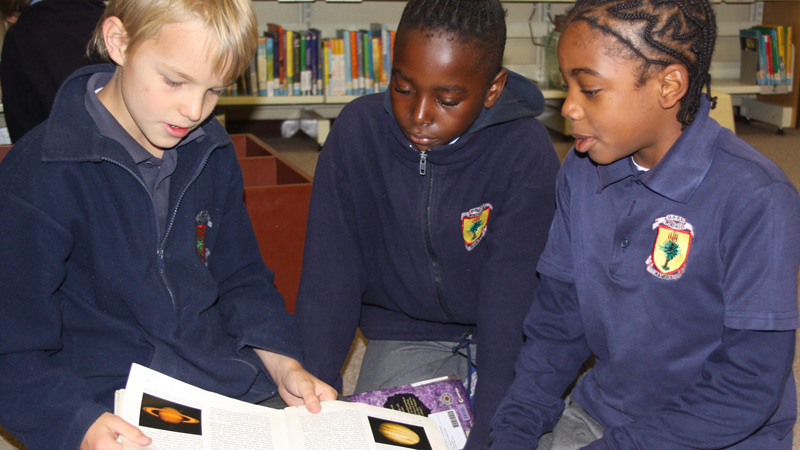
At the DHPS library, ample space is provided to read and learn and the computer-, group-, and quiet working zones are perfectly adapted to the needs of our younger and older learners.

The DHPS library material consists of the following:

  • The school library offers an extensive range of reading- and learning-materials and is open during school-time and in the afternoons.
  • The teacher library comprises 3000 media which are available to DHPS teachers.
  • The third section, the so-called “free teaching aids” comprises text books for lessons and reading material for language lessons (in class sets).

Library opening hours:

Monday - Thursday 06h50 - 13h20 and 14h00 - 16h00
Friday 06h50 - 12h30

For further information please feel free to contact:
Your contact person(s)
Design and Development by Intouch Interactive Marketing